It would be completely unfair to expect such children to manage their schooling like everyone else. They often fight hidden battles to get to school on time or focus in the classroom. Expectations may need to be adjusted for them. That's where learning support comes in.
What is learning support?
Learning support aims to help children with additional needs attend school, participate in activities, and access the curriculum.
It helps students with chronic health conditions, neurodiversity or mental health needs to succeed at school. It's a way of levelling the playing field to address individual needs and set your child up for success.
It works best as a conversation
Often, learning support involves a dialogue between the child's family, their teacher and their therapy team. When everyone is involved in the discussion, you can often create practical solutions that help your child through the school day.
What does learning support look like?
It varies depending on each child's unique needs.
Learning support could include:
- Training staff in administering an EpiPen or an asthma inhaler following a medical plan provided by their child's GP
- Providing a quiet, sensory soothing space to support self regulation for neurodivergent students or those with high anxiety levels
- Simplifying instructions or choices for some students
- Providing extra time to complete tasks
- Adjusting uniform expectations for children with sensory processing difficulties
- Supporting children in developing social skills and building friendships
- Improving gross or fine motor skills to support education and play.
Why might your child need learning support?
Your child may benefit from learning support if they have been diagnosed with a condition such as:
Signs your child might need help
Sometimes, though, your child hasn't been diagnosed with anything, but you have a niggling concern about their school readiness or school performance. Perhaps you've noticed that your child:
- Seems immature for their age
- Has a limited interest in learning
- Is easily frustrated or distracted
- Is prone to emotional outbursts
- Seems anxious about school
- Struggles to use scissors or hold a pencil
- Expresses negative thoughts about their learning.
If that sounds like your child, then please get some help. You could talk to your child's teacher or GP, who may recommend occupational therapy.
Why would a child need occupational therapy?
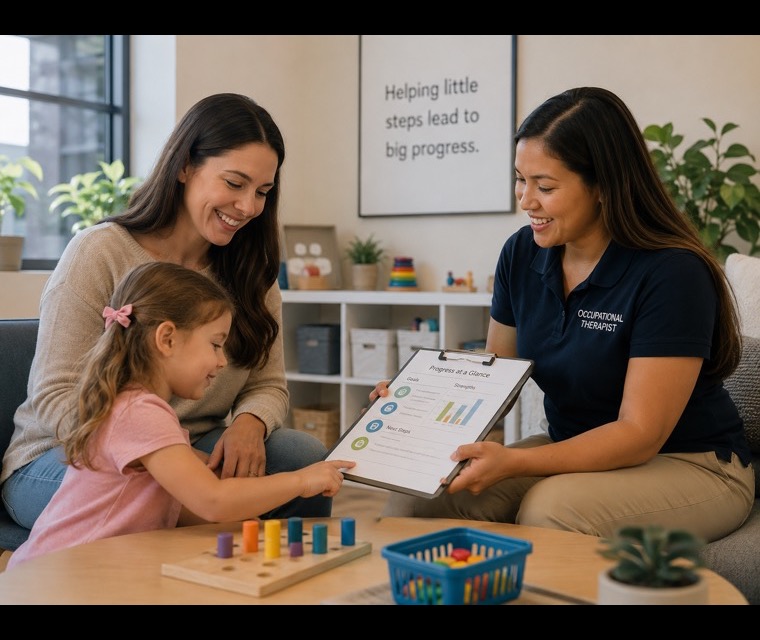
Occupational therapy (OT) is a very practical health discipline that focuses on helping your child manage daily life.
A skilled OT can help your child:
- Learn to manage their emotions and self regulate
- Develop fine motor skills (essential for writing, eating and dressing) and gross motor skills (for walking, running and climbing)
- Manage self care such as toileting or feeding
- Improve visual motor skills to boost reading ability
- Enhance social skills to build friendships.
How can Country Therapy help?
At Country Therapy, we are both occupational therapists and advocates. We team up with your family and your child's school to ensure they receive the learning support they need to thrive at school.
We can provide high quality occupational therapy to build your child's skills. And we can write reports and participate in meetings to help your child's school learn how best to help them in the classroom.
We encourage local GPs and families to get in touch
GPs can refer patients directly, and families can contact us to book an appointment.
Make a referralAll information is general and is not intended to be a substitute for professional medical advice.
References
- Australian Institute of Health and Welfare, People with disability in Australia, aihw.gov.au, [Accessed 9 January 2024]
- Nationally consistent collection of data on school students with disability, Case studies, nccd.edu.au, [Accessed 9 January 2024]
- Victorian Government, Common signs of a learning difficulty, vic.gov.au, [Accessed 9 January 2024]