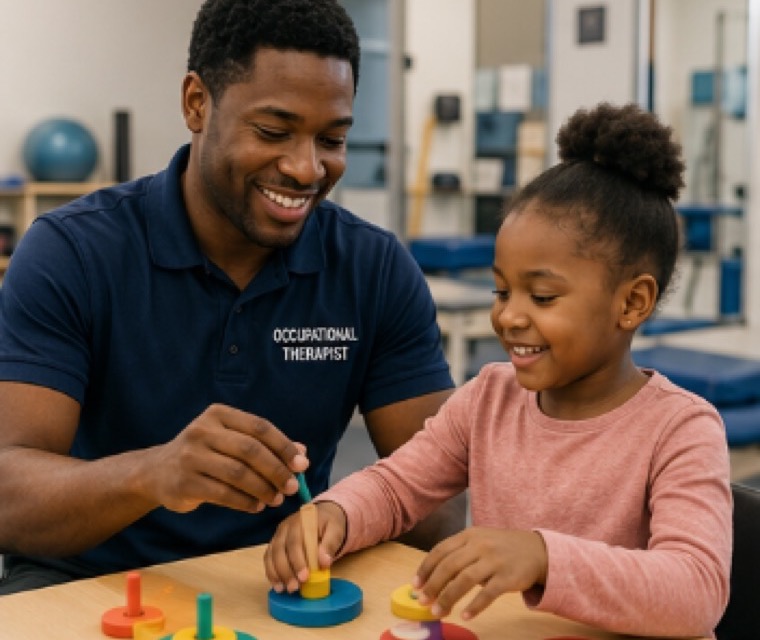
Motor skills are crucial for kids to perform various physical tasks, maintain good posture, and enhance overall coordination. In this article, we'll delve into exciting games and activities that enhance gross and fine motor skills, including balance exercises, obstacle courses, and finger painting.
Gross motor skills: the foundation of physical movement
Gross motor skills involve large muscle groups that enable kids to move, jump, and maintain balance. Here are some engaging activities to enhance gross motor skills:
Obstacle course
Set up an obstacle course using household items, such as couch cushions, chairs, and blankets. Kids can crawl, jump, and climb through the course, developing their balance and coordination.
Balance beams
Create a balance beam using a broom handle or a narrow board. Kids can walk along the beam, improving their balance and stability.
Ball games
Play catch, roll, or toss balls of varying sizes and textures. This activity enhances hand eye coordination and overall gross motor skills.
Simon Says
A classic game that encourages kids to move their bodies in different ways, promoting gross motor skills and self regulation.
Freeze dance
Put on some music and have kids dance, then freeze in place when the music stops. This activity develops gross motor skills and self control.
Fine motor skills: the precision of movement
Fine motor skills involve smaller muscle groups that enable kids to perform precise movements, such as drawing, writing, and using small objects. Here are some engaging activities to enhance fine motor skills:
Finger painting
Set up a space where kids can paint using their fingers, exploring different colours and textures. This activity develops finger strength and dexterity.
Playdough creations
Make or buy playdough and let kids shape, mould, and create various objects. This activity enhances hand eye coordination and fine motor skills.
Puzzles and play
Engage kids with puzzles, LEGO, or building blocks, which develop problem solving skills and fine motor dexterity.
Colouring and drawing
Provide various materials, such as crayons, markers, and paper, and encourage kids to express their creativity, developing fine motor skills and hand eye coordination.
Dressing and undressing
Encourage kids to dress and undress themselves, developing fine motor skills and independence.
Sensory play: exploring the world
Sensory play is essential for kids to develop their senses and motor skills. Here are some activities to incorporate:
- Sensory bin. Fill a bin with rice, beans, or sand and hide small toys or other objects for kids to find and explore.
- Play with play balls. Fill a container with play balls and let kids explore, developing their sense of touch and fine motor skills.
- Finger play. Fill a container with water and let kids play with their fingers, exploring the sensation of water and developing fine motor skills.
Additional tips
Keep in mind
- Encourage kids to engage in outdoor play, exploring nature and developing motor skills through physical activity.
- Adapt activities to suit individual needs and abilities, ensuring inclusivity and fun for all.
- Make playtime a family affair, bonding with kids while promoting healthy development.
- Provide a safe and supportive environment for kids to explore and develop their motor skills.
By incorporating these activities into your child's daily routine, you'll be supporting their overall motor skill development and setting them up for a lifetime of physical confidence and coordination, while also fostering creativity, problem solving skills, and a strong foundation for future academic and sporting success.
Want help tailoring this to your child?
Our occupational therapists work with children at home, at school and in the community.
Talk to our teamAll information is general and is not intended to be a substitute for professional medical advice.
References
- American Academy of Pediatrics, The Power of Play: A Pediatric Role in Enhancing Development in Young Children, publications.aap.org, [Accessed 17 September 2024]
- Australian Government Department of Health, Physical Activity for Children, aihw.gov.au, [Accessed 17 September 2024]
- Harvard University Center on the Developing Child, Play in Early Childhood, developingchild.harvard.edu, [Accessed 17 September 2024]
- PBS, The Importance of Art in Child Development, pbs.org, [Accessed 17 September 2024]
- National Association for the Education of Young Children, The Importance of Sensory Play, oac.edu.au, [Accessed 17 September 2024]
- Playball Australia, Physical activity feeds a child's brain and sets them up for life, playball.com.au, [Accessed 17 September 2024]
- Zero to Three, Finger Play Activities for Kids, zerotothree.org, [Accessed 17 September 2024]
- National Institute of Child Health and Human Development. (2019). Motor Skills and Development.
- LEGO Foundation. (2019). Learning Through Play.
- Occupational Therapy Australia. (2020). Playdough Activities for Kids.
- PBS Parents. (2020). The Importance of Dressing and Undressing in Child Development.
- Sensory Processing Foundation. (2020). Sensory Play Ideas.